Air Fryer Conversion Calculator
Type the oven temperature and time from any recipe or packet and get the air fryer setting in Celsius, with when to shake the basket and when to look. Tell it whether the recipe was written for a conventional or fan-forced oven and it adjusts the drop.
Australian unitsFree, no sign-upReviewed 8 September 2026
Convert
The recipe temperature is for a
Common temperatures
Common times
Air fryer setting
180°C for 24 min
200°C for 30 min in a conventional oven becomes 180°C for 24 min in the air fryer. Shake or turn at 12 min and have a look at 18 min.
Temperature
180°C
355°F
Total time
24 min
20 % less
Shake or turn
12 min
halfway
First check
18 min
open and look
- One layer. Food stacked in the basket steams instead of crisping. Cook in two batches rather than one crowded one.
- Preheat for three minutes. Most baskets need it; the times above assume it.
- Trust the thermometer over the timer. Chicken is done at 74 °C in the thickest part, pork at 71 °C, and a sausage when it reads 71 °C.
Air fryer cooking times chart, Australian favourites
For a preheated basket air fryer, one layer, freezer items straight from frozen. Models vary, so the first time you cook something open the drawer at the low end of the range.
| Food | Temp | Minutes | Notes |
|---|---|---|---|
| Frozen chips, straight cut | 200°C | 15–18 | Shake twice. No oil needed. |
| Frozen chips, shoestring | 200°C | 10–12 | Shake at halfway. |
| Frozen wedges | 200°C | 18–22 | Single layer, shake twice. |
| Hash browns | 200°C | 10–12 | Turn at halfway. |
| Party pies | 180°C | 12–15 | From frozen. Sit them on the base, no foil trays. |
| Sausage rolls, party size | 180°C | 12–15 | From frozen. Turn once. |
| Sausage rolls, large | 190°C | 20–25 | Check the middle is piping hot. |
| Dim sims | 180°C | 15–18 | Light spray of oil for a crisp skin. |
| Spring rolls, mini | 200°C | 10–12 | Shake at halfway. |
| Chicken nuggets | 200°C | 10–12 | Shake at halfway. |
| Crumbed chicken tenders or schnitzel | 200°C | 12–15 | Turn once. 74 °C inside. |
| Fish fingers | 200°C | 10–12 | Turn at halfway. |
| Crumbed fish fillets | 200°C | 12–15 | Turn once. |
| Garlic bread slices | 180°C | 6–8 | Out of the foil. Watch the last minute. |
| Frozen pizza, single serve | 180°C | 8–10 | Straight on the basket. |
| Leftover pizza slice | 170°C | 3–4 | Better than the microwave. |
| Food | Temp | Minutes | Notes |
|---|---|---|---|
| Chicken breast, 200 g | 190°C | 15–18 | Turn once. 74 °C at the thickest part. |
| Chicken thighs, boneless | 200°C | 15–18 | Skin side up to finish. |
| Chicken wings | 200°C | 20–25 | Shake twice for crisp skin. |
| Drumsticks | 190°C | 20–25 | Turn at halfway. 74 °C at the bone. |
| Whole chicken, 1.5 kg | 180°C | 50–60 | Breast down first, flip at 30 min. |
| Thick sausages | 180°C | 12–15 | Turn once. Prick them first. |
| Bacon rashers | 190°C | 8–10 | Single layer. |
| Steak, 2.5 cm thick | 200°C | 8–12 | 8 min medium-rare, turn at halfway, rest 5 min. |
| Lamb chops or cutlets | 200°C | 10–12 | Turn at halfway. |
| Pork belly, 1 kg | 200°C | 30, then 25–30 at 160 | Dry the rind well, salt it, rest 10 min. |
| Meatballs | 190°C | 10–12 | Shake at halfway. |
| Salmon fillet | 190°C | 8–10 | Skin side down. No turning. |
| Prawns | 200°C | 5–7 | Shake once. Done when pink. |
| Food | Temp | Minutes | Notes |
|---|---|---|---|
| Roast potatoes, parboiled | 200°C | 20–25 | Toss in oil first. Shake twice. |
| Jacket potato | 190°C | 40–45 | Prick, oil and salt the skin. |
| Pumpkin chunks | 200°C | 15–18 | Shake at halfway. |
| Sweet potato fries | 200°C | 12–15 | Single layer or they steam. |
| Broccoli or cauliflower florets | 190°C | 8–10 | Light oil. Shake once. |
| Brussels sprouts, halved | 190°C | 12–15 | Cut side down to start. |
| Corn on the cob | 200°C | 10–12 | Turn at halfway. |
| Halloumi slices | 200°C | 6–8 | Turn once. |
| Tofu cubes | 200°C | 12–15 | Press first, shake twice. |
Safe internal temperatures (Food Standards Australia New Zealand): poultry and mince 74°C, pork and sausages 71°C, whole cuts of beef and lamb 63°C for medium-rare.
The rule: 20 degrees cooler, 20 per cent quicker
Take the oven temperature, subtract 20°C, and take a fifth off the time. A tray of roast potatoes at 200°C for 40 minutes becomes 180°C for 32 minutes in the basket. That single rule gets you within a few minutes of right for almost everything, and the calculator above does the arithmetic and tells you when to shake the basket (at the halfway mark) and when to have a first look (at three-quarters). If the recipe was written for a fan-forced oven, the fan has already done part of the work: drop 10°C instead of 20°C, but still cut the time.
Why it works
An air fryer is a fan-forced oven the size of a saucepan. The element sits a few centimetres above the food, the fan is faster than an oven's, and there is a fraction of the air to heat, so the machine reaches temperature in three minutes and drives heat into the food hard from the first second. The smaller drop for fan-forced recipes and the bigger drop for conventional ones fall out of that: a conventional oven is the gentlest of the three, the air fryer the fiercest, with a fan-forced oven in between, and 10°C separates each step.
What converts well, and what doesn't
- Converts beautifully: anything roasted, crumbed, battered from frozen, or reheated. Potatoes, pumpkin, chicken pieces, sausages, schnitzel, fish fingers, leftover pizza, and the entire party-food aisle.
- Converts with care: cakes and muffins (use a tin that fits, drop 10°C more, and cover loosely with foil if the top browns first); whole chickens (fine at 180°C for about an hour if the bird fits with air around it); steak (searing hot, short, rest it).
- Doesn't convert: wet batters that need to be poured, anything that must sit in a lot of liquid, large roasts and trays that need more area than the basket has. That is a job for the oven or a multicooker.
Reading an Australian packet
Most frozen food sold here now prints an air fryer line next to the oven line. When it does, use it. When the packet gives only oven instructions, apply the rule, and for pastry things like party pies and sausage rolls expect to save 10 to 12 minutes on the oven time. Take them out of the foil trays so hot air reaches the base, and check that the middle is piping hot before serving, which for meat fillings means 74°C.
Capacity is the real limit
The one thing the calculator cannot fix is a crowded basket. Air must reach every surface, so food goes in a single layer with gaps, and a family's worth of chips in a 4-litre basket is two batches, not one. If that is your weeknight, a 7-litre or dual-drawer model turns dinner back into one batch; the air fryer rankings explain which capacity suits which household and what the litre figures actually mean.
Going the other way
Recipes written for the air fryer, cooked in an oven: switch the calculator to “Air fryer → oven”. It adds the 20°C back (10°C if you will use the fan), stretches the time by a quarter, and assumes a preheated oven with the tray in the top third. For the fan-forced and Fahrenheit side of that, the oven temperature converter covers every scale.
Oven to air fryer — Frequently Asked Questions
What is 180°C in an air fryer?+
About 160°C, for 20 per cent less time. Drop a conventional oven temperature by 20°C and cut the time by a fifth: 180°C for 30 minutes becomes 160°C for 24 minutes. If the recipe was already written for a fan-forced oven, drop only 10°C.
Why do you cut the time by 20 per cent?+
An air fryer is a small convection oven with a strong fan and the food sitting centimetres from the element, so heat moves into the food faster than in a big oven. Twenty per cent is the figure manufacturers and test kitchens converge on for most foods; open the drawer at three-quarters of the time and judge for yourself.
Do I need to preheat an air fryer?+
Three minutes at the cooking temperature helps anything you want crisp, and the times in the chart assume it. Some models preheat automatically; for slow-cooked or delicate things, skipping it is fine.
My air fryer only goes to 200°C. What do I do with a 220°C recipe?+
Use 200°C and add two or three minutes. Most basket air fryers sold in Australia top out at 200°C, and the difference between 200°C and 220°C in a chamber that small is smaller than it sounds. Check early.
Is an air fryer the same as a fan-forced oven?+
Same principle, more intense. Both use a fan to move hot air, but the air fryer chamber is a tenth the size and the fan is faster, so it cooks quicker again. A recipe written for fan-forced needs only a 10°C drop in the air fryer, but still about 20 per cent less time.
How do I stop food drying out?+
Lower the temperature by another 10°C and keep the time, spray lean foods lightly with oil, and do not overcook: a probe thermometer beats a timer. Chicken breast is done at 74°C in the thickest part, and lean meat keeps cooking for a few degrees after it comes out.
Can I use foil or baking paper?+
Yes, as long as air can still move: never cover the whole base, and weigh paper down with food so it does not blow into the element. Perforated air fryer liners are made for this. Foil trays from party pies and sausage rolls should come off; put the pastry straight on the basket.
How much can I cook at once?+
One layer, with gaps. Stacked chips steam, and a crowded basket takes longer than two quick batches. If you are regularly cooking for four, a 7-litre or dual-drawer model is the difference between one batch and three; our air fryer rankings say which sizes suit which households.
More kitchen calculators
Oven Temperature Converter →
Fan-forced to conventional, Fahrenheit to Celsius and gas marks, the way Australian recipes actually write them.
Cups to Grams Converter →
Australian 250 ml cups and 20 ml tablespoons to grams for 60+ ingredients, plus grams back to cups.
Meat Temperature Guide →
When to take steak, roasts, chicken, pork and fish off the heat, in Celsius, with the Australian food-safety minimums alongside.
Roast Timer →
Cooking time by weight for lamb, beef, pork with crackling, chicken, turkey and glazed ham, plus a serve-time plan that works backwards from lunch.
Appliance Running Cost Calculator →
What the kettle, the air fryer, the oven and the slow cooker actually cost to run, at your own cents per kilowatt-hour.
Slow Cooker Conversion Calculator →
Move a recipe between the oven, the stovetop, a slow cooker and a pressure cooker — including what to do about the liquid.
Cake Tin Converter →
Scale a recipe from the tin it was written for to the tin you own, in centimetres and inches, with the baking time adjusted.
Rice to Water Ratio Calculator →
Water, time and yield for nine kinds of rice by saucepan, rice cooker, pressure cooker or microwave — and the 180 ml cup that ruins it.
Coffee to Water Ratio Calculator →
Grams of coffee to millilitres of water for plunger, pour over, AeroPress, moka, cold brew and espresso, with the grind and the time.
Food Storage Chart →
How long 50 foods last in the fridge, the freezer and a vacuum bag, with the Australian food-safety rules that override every number.
Useful? Send it to whoever does the baking.
Cooking for more than two?
Capacity decides how many batches a family dinner takes. These are our three top-ranked air fryers on Amazon Australia, prices re-checked daily.

#1 Ninja XXXL FlexDrawer Air Fryer 10.4L AF500ANZ
★ 4.8 (266 reviews) · A$353.08

#2 COSORI Dual Blaze 6.4L Air Fryer
★ 4.7 (9,596 reviews) · A$326.24
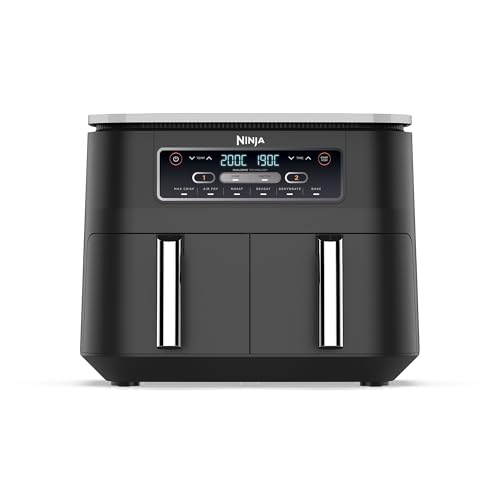
#3 Ninja Foodi Dual Zone Air Fryer 7.6L AF300ANZ
★ 4.7 (15,315 reviews) · A$179
Our rankings
Weekly kitchen deals, in your inbox
We check prices on every appliance we cover daily. Once a week we send the biggest genuine price drops we spot - the ones worth your bench space.
- One email a week, max
- No spam, ever
- Unsubscribe in one click