14 July 2026 · Blenders · top7kitchen.au editorial team
Blender Features Worth Paying For (And the Ones You Can Skip)
Not every blender feature is worth the upgrade. Here's an honest look at which features actually matter in your kitchen and which are pure marketing.
Every blender box makes big promises
Walk through the blender section of any retailer right now and you'll be hit with a wall of buzzwords. ProBlend technology. Stealth IQ. Self-Detect. Fourteen speed settings. Pre-programmed pulse. Aircraft-grade blades.
Some of these features genuinely change how you use a blender. Others are fancy ways of saying "it's a blender." The tricky part is telling them apart before you've spent the money.
So here's an honest breakdown of which blender features actually earn their price tag in an Australian kitchen, and which ones you can safely ignore. All prices and ratings are from real products available on Amazon Australia right now.
Worth paying for: enough motor power
 Philips 5000 Series Blender HR2764/00A$108.95Check Price
 Not maximum motor power. Enough motor power. There's a difference.
Blender brands love leading with wattage because big numbers sell. But an 800W blender with well-designed blades can outperform a badly designed 1500W unit. What matters is whether the motor can handle what you actually blend.
If you're making fruit smoothies with fresh or soft-frozen ingredients, 800W is genuinely fine. The Philips 5000 Series runs at 800W, sits at 4.7 stars from 89 reviews on Amazon AU, and costs just $108. It handles everyday blending without fuss.
If you regularly blend frozen fruit, ice, or thick mixtures like nut butter, you want 1000W or more. The NutriBullet Pro+ packs 1200W into a personal blender for $129 and handles frozen ingredients comfortably.
The takeaway: don't chase the highest wattage. Match the motor to what you blend. Paying $129 for 1200W makes sense if you use frozen fruit daily. Paying $300 more just for extra watts you'll never need doesn't.
Worth paying for: heated blending
This one sounds like a gimmick. It really isn't.
Anyone who's tried to blend hot soup in a regular blender knows the drill. Cook on the stove, carefully ladle boiling liquid into the blender, hold the lid down while it threatens to redecorate your ceiling, blend in small batches because filling a blender with hot liquid is asking for trouble, then clean the pot and the blender.
The Ninja Foodi Blender and Soup Maker skips all of that. You put your raw ingredients in, set it to sauté or simmer, and it cooks and blends in the same jug. No separate pot. No dangerous transfers. No batch blending.
At $302 (down from $329), it's not cheap. But 4,003 reviews at 4.7 stars on Amazon AU is an enormous vote of confidence. That's not a handful of early adopters being generous. That's thousands of people saying "yes, this works."
If you make soup even once a fortnight through winter, heated blending earns its price back in convenience alone. If soup isn't your thing, skip it entirely.
Worth paying for: a serious warranty
 Vitamix A3500i Ascent Series High Performance Blender - Brushed StainlessA$1,298.95Check Price
 This is the boring feature nobody gets excited about. It's also one of the most telling.
When a manufacturer offers a 10-year warranty, they're making a bet that their product won't break. That bet tells you more about build quality than any marketing copy ever could.
The Vitamix A3500i comes with a 10-year full warranty. At $1,104 (down from $1,299), it's by far the most expensive blender on our best blenders list. But spread over a decade of daily use, that's roughly 30 cents a day. And 4.9 stars (from a small but perfect set of reviews) suggests owners are properly happy with what they got.
Most budget blenders come with one or two-year warranties. That's not necessarily a deal-breaker for a $108 blender. But if you're spending $200 or more, check the warranty length. It's a reliable indicator of how long the manufacturer expects their product to last.
Worth paying for: combo versatility
A blender that comes with both a full-size pitcher and single-serve cups gives you two appliances in one. You can batch-blend a family soup in the big jug, then swap to a personal cup for a morning smoothie. No need to buy separate machines.
The NutriBullet Pro+ takes a simpler approach with two personal cup sizes (700ml and 900ml), which is perfect if you're mostly blending for one or two people. Hands-free auto shut-off and a pre-programmed pulse mode add genuine convenience for $129.
The key question: do you actually need both batch and personal blending? If you live alone and only make single smoothies, a personal blender is all you need. If you cook for a family and also want grab-and-go smoothies, a combo setup is worth the step up.
Worth paying for: easy cleaning
It sounds mundane. But a blender you hate cleaning is a blender that stays in the cupboard.
Self-cleaning is genuinely useful on full-size blenders. Add warm water and a drop of dish soap, run it for 30 seconds, rinse. Done. It's the difference between "I'll just blend this quickly" and "ugh, I'll have to clean it afterwards, never mind."
Detachable blades are another practical win. The Philips 5000 Series has a blade assembly that lifts right out, so you can clean around and under the blades properly instead of blindly scrubbing around a fixed blade unit. At $108, it's one of the most affordable blenders with this feature.
Dishwasher-safe parts matter too. If the cups and lids can go straight in the dishwasher, you'll use the blender more. Simple as that.
Not worth it: excessive speed settings
Some blenders advertise ten, twelve, even fourteen speed settings. Sounds impressive. In practice? You'll use maybe three.
Low for soft blends. High for frozen fruit and ice. Pulse for control. That covers about 95% of everything you'll ever do with a blender. The difference between speed 7 and speed 9 on a 14-speed dial is basically nothing your taste buds can detect.
What's more useful than a dozen speed notches is a well-designed preset program. Set it, walk away, come back to a done smoothie. The Vitamix does this with five preset programs (smoothie, hot soup, frozen dessert, puree, self-clean). You press one button and forget about it. That's worth more than a 14-position dial you'll never fully explore.
Not worth it: cordless (for most people)
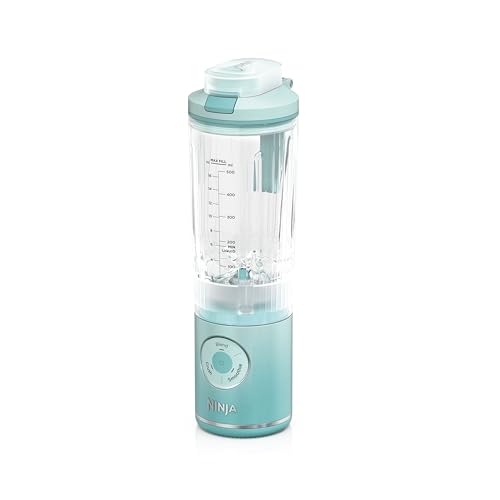 Ninja Blast Max Cordless Portable BlenderA$129Check Price
 Portable blenders have their place. The Ninja Blast Max is a solid cordless option at $128 with USB-C charging and a leak-proof lid. If you genuinely blend at the gym, at work, or while camping, it's a clever bit of kit.
But for home use? You're trading serious blending power for the convenience of not plugging in a cord. That's a bad trade in a kitchen where power outlets are always within reach.
A cordless blender won't crush ice as well as a plug-in model. It won't handle thick mixtures or hot ingredients. The battery needs charging. And the capacity is always single-serve.
If you already have a benchtop blender and want something for travel, a portable blender is a nice extra. As your only blender? Think carefully about what you're giving up.
Not worth it: brand prestige alone
Here's a slightly uncomfortable truth. A $108 Philips blender with 4.7 stars and a $1,104 Vitamix with 4.9 stars both make smoothies. Good smoothies. The Vitamix makes them slightly smoother, handles harder ingredients, and will last longer. But "slightly smoother" might not be worth ten times the price for your kitchen.
The Philips 5000 Series at $108 covers everyday blending beautifully. The NutriBullet Pro+ at $129 adds serious motor power for frozen ingredients. Either one handles 80% of what most Australians actually do with a blender.
The premium options from Vitamix and Ninja earn their price through specific capabilities - heated blending, decade-long durability, preset automation. If you need those specific things, they're worth it. If you don't, a $108-$130 blender is not a compromise. It's the right call.
The quick checklist
Before you buy, run through this:
- Do you blend frozen fruit or ice regularly? Get at least 1000W. The NutriBullet Pro+ ($129) hits this.
- Do you make soups? A heated blender like the Ninja Foodi Soup Maker ($302) saves real hassle.
- Do you blend for a family? Look for a combo with a full-size pitcher, not just personal cups.
- Will you actually clean it? Prioritise self-clean functions and dishwasher-safe parts.
- Do you want it to last a decade? Check the warranty. Vitamix leads here.
- Do you blend on the go? A cordless portable is a nice second blender, not a replacement for your main one.
The best blender isn't the one with the most features. It's the one where every feature you paid for actually gets used.
For the full comparison of all seven blenders on our list, including current prices and detailed ratings, check out our complete blender guide for Australia. And if you're kitting out your kitchen more broadly, our multicooker comparison covers another appliance that earns its bench space through sheer versatility.
Top Picks — Check Latest Prices


See Our Top 7 Blenders for Australia
Hand-picked and ranked by our editors — with honest pros, cons, and Aussie pricing.
Weekly kitchen deals, in your inbox
We check prices on every appliance we cover daily. Once a week we send the biggest genuine price drops we spot - the ones worth your bench space.
- One email a week, max
- No spam, ever
- Unsubscribe in one click